[ad_1]
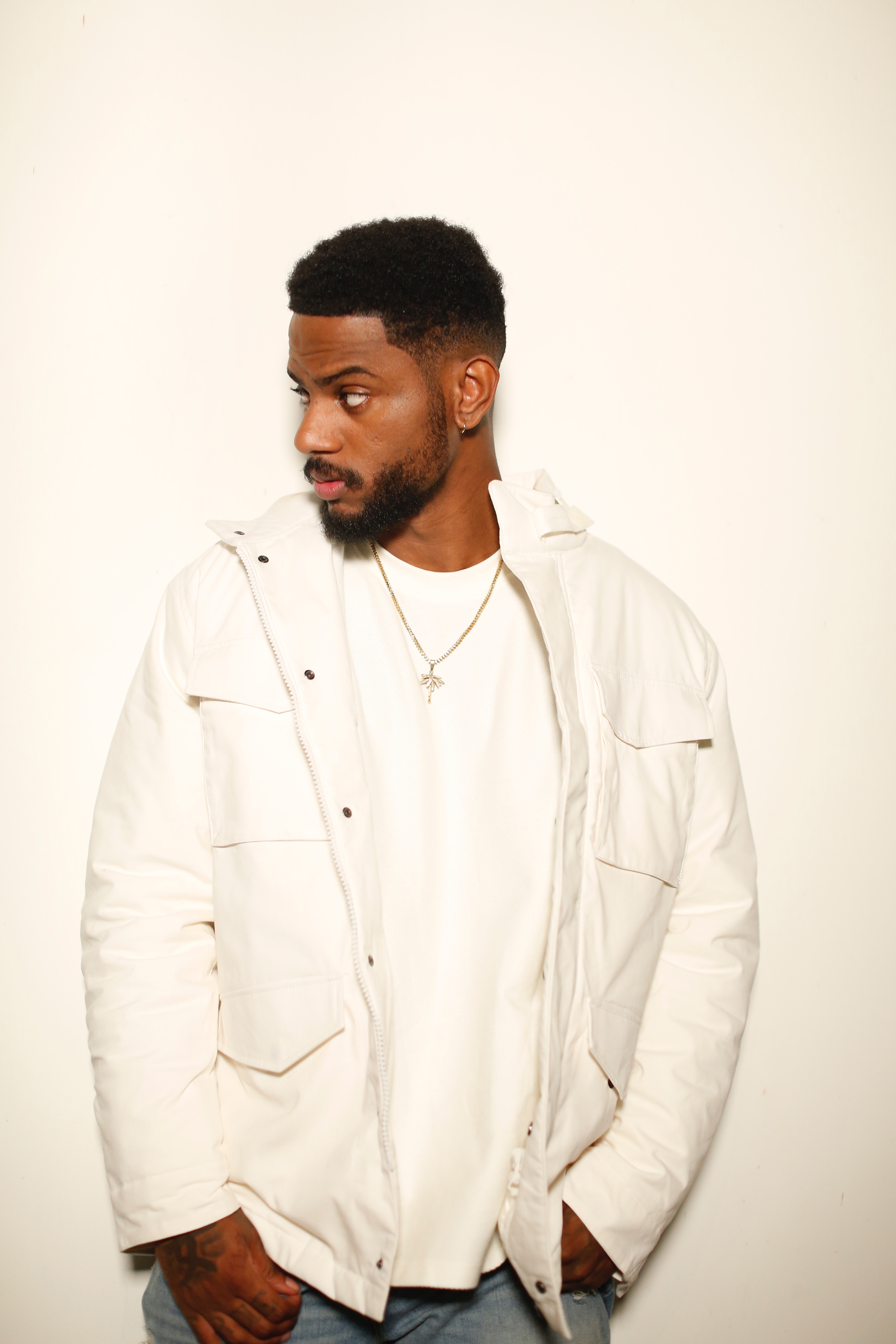
Break his heart, we need a new album is just one type of comment Bryson Tiller has seen under his girlfriend’s photos as fans await his highly anticipated third studio full-length. It’s been three years since listeners—and Tiller himself—were left largely unimpressed with his sophomore project, True to Self. A year later, the otherwise tight-lipped singer opened up about his battle with depression, which he says showed up on the album he’d made.
For longtime R&B fans, the revelation felt like déjà vu. With D’Angelo, we’d witnessed how fame could cause a promising singer to withdraw from the spotlight at the height of his career. TRAPSOUL, Tiller’s cult classic debut, went double platinum. And despite the scathing critiques describing True to Self as “repetitive” and “bland” (even former Noisey staffers didn’t quite understand the appeal) the album climbed to No. 1 of the Billboard 200. The album’s commercial success wasn’t enough to quiet the singer’s negative thoughts about it, like the digs people were leaving in comment sections—even if he agreed with many of them. But on his third studio album Anniversary, out today, Tiller isn’t holding grudges. Instead, the 27-year-old singer is dissecting life’s important moments when the pandemic has us all questioning what time really means.
“Who I was last year, or any year before that, would say I do think people were too hard on me,” Tiller tells me over a Google Hangout. “But who I am now understands why they were.” He’s phoned in from a studio in Los Angeles bathed in red lighting, which, thanks to TLC, is about as R&B as you can get. Wearing a shirt from the new merch commemorating the five-year anniversary of TRAPSOUL, the plain-spoken album that took him from being a Papa John’s employee in Louisville to an overnight R&B sensation, the singer seems nervous but eager to talk about the music he’s created in purgatory.
“Who I was last year, or any year before that, would say I do think people were too hard on me,” Tiller tells me over a Google Hangout. “But who I am now understands why they were.” He’s phoned in from a studio in Los Angeles bathed in red lighting, which, thanks to TLC, is about as R&B as you can get. Wearing a shirt from the new merch commemorating the five-year anniversary of TRAPSOUL, the plain-spoken album that took him from being a Papa John’s employee in Louisville to an overnight R&B sensation, the singer seems nervous but eager to talk about the music he’s created in purgatory.
Critics who clowned Bryson Tiller for having “no personality” made bashing Bryson Tiller a personality trait. But it was the singer’s underdog spirit that made his story one you’d want to champion. There was no manpower of a big city behind him. His charm was that he seemed like the boy next door, and his music reflected that. He didn’t have the type of voice that was reared in the church, and his raps rarely got disrespectful. R&B has a longstanding tradition of creating an oversexualized caricature of its male vocalists, particularly when it comes to Black men. Bryson Tiller wasn’t that.
TRAPSOUL, his claim to fame, wasn’t just the title of his debut, but a niche he was carving out for himself. The marriage of R&B and rap wasn’t new, but the way Tiller did it was. He approached his music with the hustle of a rapper, uploading tracks to SoundCloud and finding free beats where he could. But the milestone isn’t the only reason why his return feels particularly timely.
In recent months, the death of Breonna Taylor and the failure to convict her killers, has thrust Louisville, his hometown, into the center of the national conversation, prompting the singer to put up billboards across the city in her honor. And as far as COVID-19 is concerned, Tiller, a guy who rapped about wanting to be able to shop in Target in peace, could practically have written the manual on social distancing. If the old adage says eyes are the window to someone’s soul, it’s no coincidence that Tiller’s are usually hidden under a dad cap.
TRAPSOUL, his claim to fame, wasn’t just the title of his debut, but a niche he was carving out for himself. The marriage of R&B and rap wasn’t new, but the way Tiller did it was. He approached his music with the hustle of a rapper, uploading tracks to SoundCloud and finding free beats where he could. But the milestone isn’t the only reason why his return feels particularly timely.
In recent months, the death of Breonna Taylor and the failure to convict her killers, has thrust Louisville, his hometown, into the center of the national conversation, prompting the singer to put up billboards across the city in her honor. And as far as COVID-19 is concerned, Tiller, a guy who rapped about wanting to be able to shop in Target in peace, could practically have written the manual on social distancing. If the old adage says eyes are the window to someone’s soul, it’s no coincidence that Tiller’s are usually hidden under a dad cap.
But as guarded as he is, he also provides fragments of his life story in his music. “The game called me and said come back right now,” he sings on Anniversary’s opener, “Years Go By.” The timing, although unfortunate, feels right.
The fight for Black lives has also meant calling upon the music industry to value Black artists as more than as a commodity. On True to Self’s “Before You Judge,” Tiller raps a fiery verse detailing his struggles with his former management team: “Just got a new manager, my last one was fucking up my vision / Can’t believe this nigga still tryna get a percentage / I gave you back your investment, get out your feelings.” As for the legal proceedings, Tiller says he’s “completely done with that,” but explains that the situation was one of the inspirations behind Anniversary.
“I got the idea for this album earlier this year when I was sitting in a 12-hour deposition,” he says, recalling that the process involved revisiting emails dating as far back as 2014. Seeing the evidence of his earliest musical footprints was a reminder of how far he’d come. “I was like, Wow, it’s been that long since ‘Don’t.‘ I called my manager [Neil Dominique] like, ‘Yo, I want to do an album and I want to call it Anniversary as a gift and a thank you to my fans.'”
Just like on a traditional anniversary, Tiller’s third studio album sees the artist wooing his listener all over again. The album is almost like a scavenger hunt, scattering Tiller’s trademarks for listeners to uncover throughout its 10 tracks. “Inhale,” Anniversary’s lead single, follows the sample-heavy formula that made TRAPSOUL’s hit single “Exchange” popular, resuscitating Mary J. Blige and SWV’s singles from the Waiting to Exhale soundtrack. As overused as R&B samples can be, “Inhale”‘ stands out because the Dpat-produced mix features a skit from Brent Faiyaz. In a genre that so often prioritizes female voices, it’s the rare R&B track that centers two male artists, and friends, at the top of their game.
The other voice we hear on Anniversary is one that sees Tiller fulfilling one of the pipe-dreams he sang about his debut: a feature with Drake. “Outta Time” is a full circle moment from 2015’s “Ten Nine Fourteen,” which rejoices at the mere fact that the Kentucky singer was able to get a co-sign from the Toronto rapper. Now, the two are friendly enough that a text is all it takes to conjure up a collaboration.
The fight for Black lives has also meant calling upon the music industry to value Black artists as more than as a commodity. On True to Self’s “Before You Judge,” Tiller raps a fiery verse detailing his struggles with his former management team: “Just got a new manager, my last one was fucking up my vision / Can’t believe this nigga still tryna get a percentage / I gave you back your investment, get out your feelings.” As for the legal proceedings, Tiller says he’s “completely done with that,” but explains that the situation was one of the inspirations behind Anniversary.
“I got the idea for this album earlier this year when I was sitting in a 12-hour deposition,” he says, recalling that the process involved revisiting emails dating as far back as 2014. Seeing the evidence of his earliest musical footprints was a reminder of how far he’d come. “I was like, Wow, it’s been that long since ‘Don’t.‘ I called my manager [Neil Dominique] like, ‘Yo, I want to do an album and I want to call it Anniversary as a gift and a thank you to my fans.'”
Just like on a traditional anniversary, Tiller’s third studio album sees the artist wooing his listener all over again. The album is almost like a scavenger hunt, scattering Tiller’s trademarks for listeners to uncover throughout its 10 tracks. “Inhale,” Anniversary’s lead single, follows the sample-heavy formula that made TRAPSOUL’s hit single “Exchange” popular, resuscitating Mary J. Blige and SWV’s singles from the Waiting to Exhale soundtrack. As overused as R&B samples can be, “Inhale”‘ stands out because the Dpat-produced mix features a skit from Brent Faiyaz. In a genre that so often prioritizes female voices, it’s the rare R&B track that centers two male artists, and friends, at the top of their game.
The other voice we hear on Anniversary is one that sees Tiller fulfilling one of the pipe-dreams he sang about his debut: a feature with Drake. “Outta Time” is a full circle moment from 2015’s “Ten Nine Fourteen,” which rejoices at the mere fact that the Kentucky singer was able to get a co-sign from the Toronto rapper. Now, the two are friendly enough that a text is all it takes to conjure up a collaboration.
“We never really got the chance to sit in the studio, so we just send stuff over text,” he says. I sent him [a song] one evening, and he was like, ‘Oh man, is this for us?'” The Drake verse would sit in his arsenal for nearly eight months as he figured out which songs would make it onto the record, making it a last-minute addition to Anniversary. “My manager Neil brought it up to me when we were listening to the new album, like ‘Whatever happened to that?’
In a year as chaotic as 2020, nothing feels better than a dose of nostalgia, which is why, when it came time to begin work on Anniversary, Tiller returned to the files on his harddrive that started it all.
“There’s a lot of songs on this project that were supposed to be on TRAPSOUL,” he says. Lackluster reactions to the songs that ended up on his debut caused Tiller to second-guess ideas that weren’t yet fully formed. “I gave up on a lot of those ideas back then, and now I’m like, Why did I ever do that? I’ll listen to an older beat and I’m like, How the hell does this still beat still go so hard in 2020? This is timeless. It made me want to finish what I started.”
Although he plans on dishing which songs were intended for TRAPSOUL one day, for now, he’s keeping that close to the chest. But his choice of phrasing could mean that “Timeless,” a rap-laden cut from Anniversary, might be one. Relationships are the cornerstone of Tiller’s catalogue, but “Timeless” feels like the listener is eavesdropping on an intimate conversation he’s having with God. “Normally I’m closed off, but just for this specific song I might try to let them in,” he raps.
In a year as chaotic as 2020, nothing feels better than a dose of nostalgia, which is why, when it came time to begin work on Anniversary, Tiller returned to the files on his harddrive that started it all.
“There’s a lot of songs on this project that were supposed to be on TRAPSOUL,” he says. Lackluster reactions to the songs that ended up on his debut caused Tiller to second-guess ideas that weren’t yet fully formed. “I gave up on a lot of those ideas back then, and now I’m like, Why did I ever do that? I’ll listen to an older beat and I’m like, How the hell does this still beat still go so hard in 2020? This is timeless. It made me want to finish what I started.”
Although he plans on dishing which songs were intended for TRAPSOUL one day, for now, he’s keeping that close to the chest. But his choice of phrasing could mean that “Timeless,” a rap-laden cut from Anniversary, might be one. Relationships are the cornerstone of Tiller’s catalogue, but “Timeless” feels like the listener is eavesdropping on an intimate conversation he’s having with God. “Normally I’m closed off, but just for this specific song I might try to let them in,” he raps.
This isn’t the first time he’s broken the fourth wall between us and his prayers, but it does feel the most absolute—like he’s finally surrendering to the path he’s supposed to be on.
According to Tiller, the death of his grandmother, who raised Tiller after his mother died when he was just four years old, awakened his faith. “Her passing made me change the way I viewed myself and the way I viewed everything I’ve done in the past,” he says. “If my grandma’s up there with Him personally, asking Him to heal me, I have to put in the physical leg work toward reaching that goal.”
“Keep Doing What You’re Doing” opens with birthday wishes from his grandmother, who he affectionately calls “Mamaw.” “That’s the last clip I have of her saying anything,” he says, recalling their last few messages to each other. “After she passed, the first thing I noticed was that I didn’t respond to enough text messages and I wasn’t as enthusiastic when I responded. I was holding onto some things from my childhood that I never got past. That’s one of my biggest regrets.” What follows is an emotional tribute to the woman who raised him, grounded in the sobering reality that by the time he was ready to take his grandmother’s advice, she wasn’t there to see it. “I wish I believed when you told me you believed in me,” he sings.
According to Tiller, the death of his grandmother, who raised Tiller after his mother died when he was just four years old, awakened his faith. “Her passing made me change the way I viewed myself and the way I viewed everything I’ve done in the past,” he says. “If my grandma’s up there with Him personally, asking Him to heal me, I have to put in the physical leg work toward reaching that goal.”
“Keep Doing What You’re Doing” opens with birthday wishes from his grandmother, who he affectionately calls “Mamaw.” “That’s the last clip I have of her saying anything,” he says, recalling their last few messages to each other. “After she passed, the first thing I noticed was that I didn’t respond to enough text messages and I wasn’t as enthusiastic when I responded. I was holding onto some things from my childhood that I never got past. That’s one of my biggest regrets.” What follows is an emotional tribute to the woman who raised him, grounded in the sobering reality that by the time he was ready to take his grandmother’s advice, she wasn’t there to see it. “I wish I believed when you told me you believed in me,” he sings.
Just before Tiller released TRAPSOUL, his grandmother sent her blessings for his budding career. “She said, ‘Grandson, I love the “Don’t” video. Keep doing what you’re doing. I’m so proud of you.” When she suggested he tuck the phrase “Keep doing what you’re doing” away for a future song title, he laughed it off. “Back then I was like, I ain’t gon’ make no song called ‘Keep Doing What You’re Doing.’ It didn’t sound cool to me at all,” he says, snickering in retrospect.
The day after her death, he reread that old text message and headed to the studio. “I started crying when I saw it, because I really started to think about that. Everything I did to get me here, there was somebody who didn’t believe in it. Some people told me ‘Don’t’ was my only good song.” After recording the first part of “KDWYD”, he focused on pouring his reflections on the remainder of the track. According to him, he cried “about a thousand times” when he finished penning the song in Los Angeles.
Last week, he released a video for “Right My Wrongs,” finally giving TRAPSOUL’s heartfelt closer a long overdue visual. Like his backdated Instagram, it’s a time capsule of the moments that solidified his stardom, from his first shows to sold out arenas. Revisiting Tiller’s debut in an era where artists like H.E.R., Lucky Daye, and Victoria Monét rely largely on live instrumentation makes the 808-heavy, “type beat” production of TRAPSOUL feel like an artifact of SoundCloud’s peak—but that’s also its allure. One listen is enough to transport you back to the year when Barack Obama was still president and our biggest concern seemed to be Drake’s really bad dance moves. Tiller’s dysfunction was a mirror to your own and his potential was enough to inspire yours too.
There is no Anniversary without TRAPSOUL, and contemporary R&B’s scene wouldn’t exist as it does without Tiller’s success. When I ask if he sees himself as playing a role in R&B’s resurgence, he hesitates a bit.
“Any time before my grandmother’s passing, I probably would’ve been disagreeing with you,” he says. “I was scared to believe. Righting my wrongs is me saying I’m going to continue to believe in myself instead of listening to the critics. I’m going to keep doing what I’m doing.”
Kristin Corry is a Senior Staff Writer for VICE.
The day after her death, he reread that old text message and headed to the studio. “I started crying when I saw it, because I really started to think about that. Everything I did to get me here, there was somebody who didn’t believe in it. Some people told me ‘Don’t’ was my only good song.” After recording the first part of “KDWYD”, he focused on pouring his reflections on the remainder of the track. According to him, he cried “about a thousand times” when he finished penning the song in Los Angeles.
Last week, he released a video for “Right My Wrongs,” finally giving TRAPSOUL’s heartfelt closer a long overdue visual. Like his backdated Instagram, it’s a time capsule of the moments that solidified his stardom, from his first shows to sold out arenas. Revisiting Tiller’s debut in an era where artists like H.E.R., Lucky Daye, and Victoria Monét rely largely on live instrumentation makes the 808-heavy, “type beat” production of TRAPSOUL feel like an artifact of SoundCloud’s peak—but that’s also its allure. One listen is enough to transport you back to the year when Barack Obama was still president and our biggest concern seemed to be Drake’s really bad dance moves. Tiller’s dysfunction was a mirror to your own and his potential was enough to inspire yours too.
There is no Anniversary without TRAPSOUL, and contemporary R&B’s scene wouldn’t exist as it does without Tiller’s success. When I ask if he sees himself as playing a role in R&B’s resurgence, he hesitates a bit.
“Any time before my grandmother’s passing, I probably would’ve been disagreeing with you,” he says. “I was scared to believe. Righting my wrongs is me saying I’m going to continue to believe in myself instead of listening to the critics. I’m going to keep doing what I’m doing.”
Kristin Corry is a Senior Staff Writer for VICE.
[ad_2]
Source link